There is no single “best” Maryland ADU builder—and “prefab” can mean very different things. A homeowner may be comparing a local design-build contractor, a state-regulated modular dwelling, a pre-cut building kit, or a mobile/tiny product that still needs a lawful Maryland approval path before it can become a permanent ADU.
This guide compares companies that publicly state they serve Maryland ADU, modular, or small-home projects. Inclusion is not an endorsement or paid ranking. We do not rank companies based on payment, and we do not treat a marketing claim such as “turnkey,” “certified,” or “prefab” as proof that a specific product can be permitted on a specific Maryland lot.
If you know your jurisdiction and project type and want professional help, see our Maryland ADU project-assistance pilot.
Find ADU professionals by county →Prepare a project request →
Last verified: September 6, 2026. Company service areas, licenses, pricing and product offerings can change. Re-check contractor licensing, insurance, model approval and local permit eligibility before signing a contract or paying a deposit.
Quick answer: which ADU delivery model fits your project?
| Delivery model | What you are really buying | Best fit | Main question to resolve |
|---|---|---|---|
| Local design-build / site-built | One team may handle feasibility, drawings, engineering, permits and conventional construction. | Irregular lots, custom designs, additions, conversions, difficult utility/site conditions. | Exactly which design, permit, utility and site-work items are included in the contract? |
| Turnkey ADU specialist | A coordinated ADU-focused process, usually design + permitting + construction. | Homeowners who want one accountable project lead. | Does “turnkey” include survey, civil work, utility upgrades, septic/well, foundation, landscaping and final approvals? |
| Industrialized / modular dwelling | Factory-built dwelling sections regulated through Maryland’s industrialized-building program, then installed on a permanent foundation. | Repeatable designs and projects where factory construction can simplify part of the build. | Who is the approved manufacturer, what is the Maryland model approval path, and who handles local site/foundation work? |
| Prefab / pre-cut kit | A materials/structural package delivered to the site; it is not automatically a completed dwelling. | Owners with a qualified local builder and a clear permit path. | What is excluded from the kit price—foundation, labor, MEP, permits, finishes, utilities, crane/delivery? |
| Mobile / tiny product | A transportable product whose legal classification may differ from a state-regulated modular dwelling. | Only after the exact product classification and local dwelling approval path are confirmed. | Can this exact model legally become a permanent dwelling/ADU on your property? |
Maryland ADU builders by service area, scope and price
The table below reports what each company publicly states on the pages we reviewed. “License published” means the company publishes a Maryland license or registration number on its own site; homeowners should still verify current status with the issuing authority.
| Company | Model | Maryland scope publicly stated | Permit / design scope | Public licensing detail | Pricing transparency |
|---|---|---|---|---|---|
| Makara ADU | ADU-focused design-build / turnkey | Montgomery, Anne Arundel, Howard and Frederick counties plus multiple Maryland cities | Company states feasibility, plans, permitting, engineering and construction are available | Publishes MHIC 151479 and Maryland HBR 9666 | Publishes broad ADU cost ranges, not a fixed project price |
| UP Craftsmen | Design-build ADU series; some prefabricated production language | Montgomery County focus; site states service across Maryland | Design, engineering, permit walkthrough, construction and installation | Publishes MHIC 0151386 | No turnkey ADU price found on reviewed pages |
| Karma Construction Group | Site-built design-build | Public ADU page names Montgomery, Prince George’s, Howard and Frederick counties | Design, engineering, permitting and construction under one contract | Publishes MHIC 108917 and Maryland HBR 8756 | No Maryland ADU price found on reviewed pages |
| Clarksville Construction Services | Custom site-built ADUs / in-law suites | Company markets ADU construction across Maryland; Maryland HQ and Eastern Shore division | Custom design/build; exact ADU permit scope should be confirmed in proposal | Publishes MHIC 78947 | No ADU-specific public price found on reviewed pages |
| Capital ADU | Turnkey ADU specialist | Maryland, DC and Northern Virginia; dedicated Bethesda and Silver Spring pages | Design, architectural/structural/MEP plan set, permit management and construction | Site states licensed in Maryland; license number did not surface on the reviewed public pages | No Maryland turnkey price found on reviewed pages |
| PurBilt | Modular / full-service ADU builder | Company confirms service throughout Maryland; preferred area is generally within 90 minutes of Anne Arundel County | Company confirms design, engineering, permitting and construction; detached, attached, garage, basement/interior and modular/prefab ADUs | Publishes MHIC 73624 and MHBR 8942 | Publishes general modular-home ranges; not ADU-specific |
| DC Structures | Prefab / pre-cut kit supplier | Ships building kits across Maryland | In-house design and permitting support; a local build/site scope is still required | Kit supplier rather than a Maryland turnkey contractor in this comparison | Publishes kit starting prices and warns turnkey cost can be multiples of kit price |
| Mod Podz | Small-space / mobile and custom builds | Bowie-based; company states it builds ADUs and is licensed in Maryland | Company states it can assist with permits and regulations | States Maryland builder/MHIC licensing, but number did not surface on reviewed pages | Publishes starting prices for some mobile models and a custom-build $/sq-ft range |
Prefab in Maryland: the approval distinction that matters before you shop
Maryland’s Department of Labor distinguishes a true industrialized/modular building from a manufactured/mobile home. A Maryland modular home is substantially built off site, intended for a permanent foundation, and regulated through the state industrialized-building program. The state reviews the factory-built unit, while the local building department still reviews the permit, site, foundation and other site work.
Maryland also maintains current lists of approved industrialized/modular manufacturers and model/project approvals. A brand name on a sales website may not be the same name as the actual factory manufacturer or model identifier shown in state records.
2026 Maryland model-status check: Maryland Labor’s current Industrialized Building project-status list was updated September 16, 2026 and tracks individual model IDs as Approved, Under Review, Hold or other statuses. For a factory-built ADU, ask the seller for the exact model number and manufacturer ID, then compare that identifier with the State’s 2026 project-status list. A company saying it “builds in Maryland” is not the same thing as confirming that the exact model you are buying has completed the applicable state approval path.
We reviewed Maryland’s 2026 public model-status and approved-manufacturer pages. We did not use the absence of a retail brand name from those lists as proof that a product is unapproved, because a retailer may use a separate approved factory manufacturer. The correct verification is model-by-model.
What the companies actually publish about price
Published prices are difficult to compare because they describe different scopes. A kit price, factory module price and turnkey ADU contract are not equivalent.
| Provider | Company-published price information | Important limitation |
|---|---|---|
| Makara ADU | Its Maryland cost article gives a broad range of roughly $60,000–$225,000 for ADUs, with larger/high-finish projects potentially above $300,000. | The same company explains that site development and soft costs can be additional; this is not a quote for a specific Maryland lot. |
| PurBilt | Publishes a general Maryland modular-home range of about $150,000–$400,000 fully installed and a factory-module range around $80–$160/sq ft. | These are general modular-home figures, not a published Maryland ADU price schedule. |
| DC Structures | Its Sitka ADU kit starts around $21,908; its Maryland kit page says complete turnkey cost can be 2–5× the initial kit price. | The starting figure is a kit price, not a completed habitable Maryland ADU. |
| Mod Podz | Publishes mobile-model starting prices around $89,000 and $135,000; FAQ says custom builds are generally around $200–$265/sq ft. | Confirm whether the quoted product is a permanent code-compliant ADU, a mobile unit, or another classification and what site work is excluded. |
| UP Craftsmen / Karma / Clarksville / Capital ADU | No comparable Maryland turnkey ADU price was found on the public pages reviewed. | Request a written scope-based proposal rather than comparing a private quote with another company’s marketing range. |
Company-by-company notes
Makara ADU — ADU-focused design-build with Maryland project examples
Makara is based in Gaithersburg and publishes a large library of compact plans from roughly 300 square feet through 1,100 square feet, plus custom design. Its site shows Maryland examples in Bethesda, Germantown, Burtonsville, Silver Spring and Annapolis, and states that it handles feasibility, plans, permitting and construction.
Best reason to interview: the public project gallery provides Maryland-specific examples rather than only concept renderings. Ask: which civil, utility, stormwater, septic/well and landscape-restoration items are included in the proposal, and whether the published cost ranges match your county/site conditions.
UP Craftsmen — Montgomery County-focused design/build process
UP Craftsmen is headquartered in Silver Spring and markets an end-to-end process covering design, engineering, permit walkthrough and construction. Its site emphasizes Montgomery County familiarity, offers a feasibility-study entry point, and publishes MHIC 0151386.
Best reason to interview: strong local focus for Montgomery County. Ask: whether your proposed residential ADU is site-built or uses a prefabricated product line, who is the manufacturer if factory-built components are used, and whether final county licensing/inspection tasks are included.
Karma Construction Group — multi-county full-service design/build
Karma’s Maryland ADU page names Montgomery, Prince George’s, Howard and Frederick counties and describes design, engineering, permitting and construction under one contract. Its licensing page publishes Maryland MHIC 108917 and HBR 8756.
Best reason to interview: multi-county design-build scope with public license identifiers. Ask: for completed Maryland ADU references in your specific county and a line-item explanation of site work, utilities, fees and allowance items.
Clarksville Construction Services — established Maryland custom builder
Clarksville Construction markets custom ADUs and in-law suites across Maryland and operates from Hanover with an Eastern Shore division. The company publishes MHIC 78947. Its public positioning is broader custom construction rather than a standardized prefab catalog.
Best reason to interview: custom/site-built option for homeowners who do not want to force a lot into a stock prefab plan. Ask: who prepares the ADU drawings/engineering, what county permitting experience the assigned team has, and whether the contract is fixed-price, allowance-based or cost-plus.
Capital ADU — DMV turnkey specialist with Maryland service pages
Capital ADU states that it designs, permits and builds turnkey ADUs across Maryland, DC and Northern Virginia, with dedicated Bethesda and Silver Spring pages. Its planning service describes architectural, structural and MEP permit-ready drawings plus permit management.
Best reason to interview: ADU-specific planning and permit workflow. Verify before contracting: its site says it is licensed in Maryland, but a Maryland license number did not surface on the public pages we reviewed. Ask for the exact legal contracting entity, current Maryland license number and certificate of insurance before signing.
PurBilt — Maryland modular builder handling design through construction
Company-verified September 22, 2026: PurBilt Modular told Maryland ADU Guide that it serves customers throughout Maryland, with a preferred service area generally within a 90-minute radius of Anne Arundel County. The company says it takes on detached, attached, garage-conversion, basement/interior, and modular or prefabricated ADUs and can coordinate design, engineering, permitting and construction. PurBilt also publicly lists MHIC 73624 and MHBR 8942.
Public contact: Richard Giordano, Vice President · Rich@purbilt.com · (410) 919-4337.
Best reason to interview: a Maryland-based modular path with a company-confirmed end-to-end scope. Ask: which factory/manufacturer and specific Maryland-approved model would be used for your ADU, whether crane/set, foundation, utility connections and local inspections are in the price, and which costs remain provisional until site evaluation.
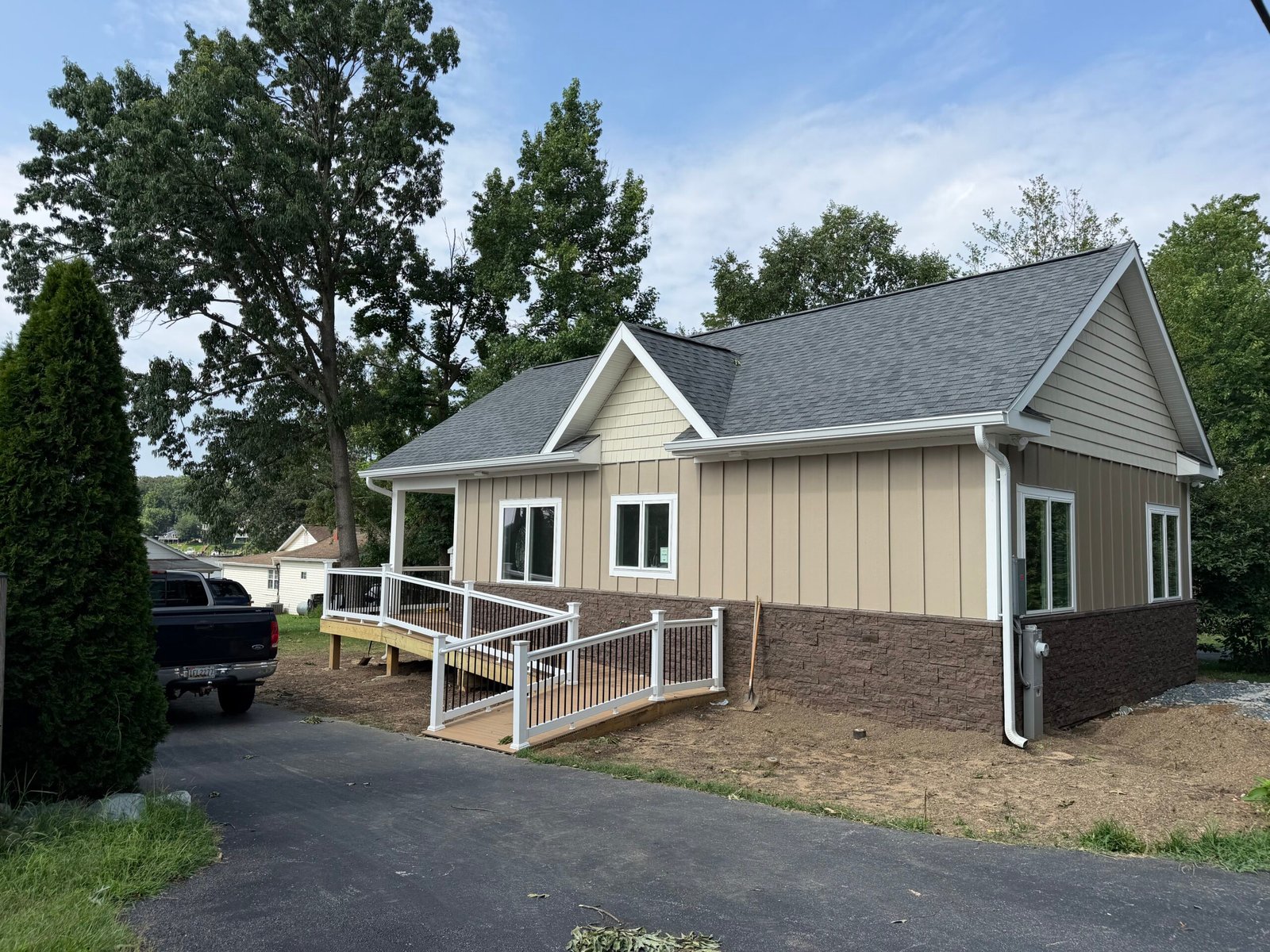
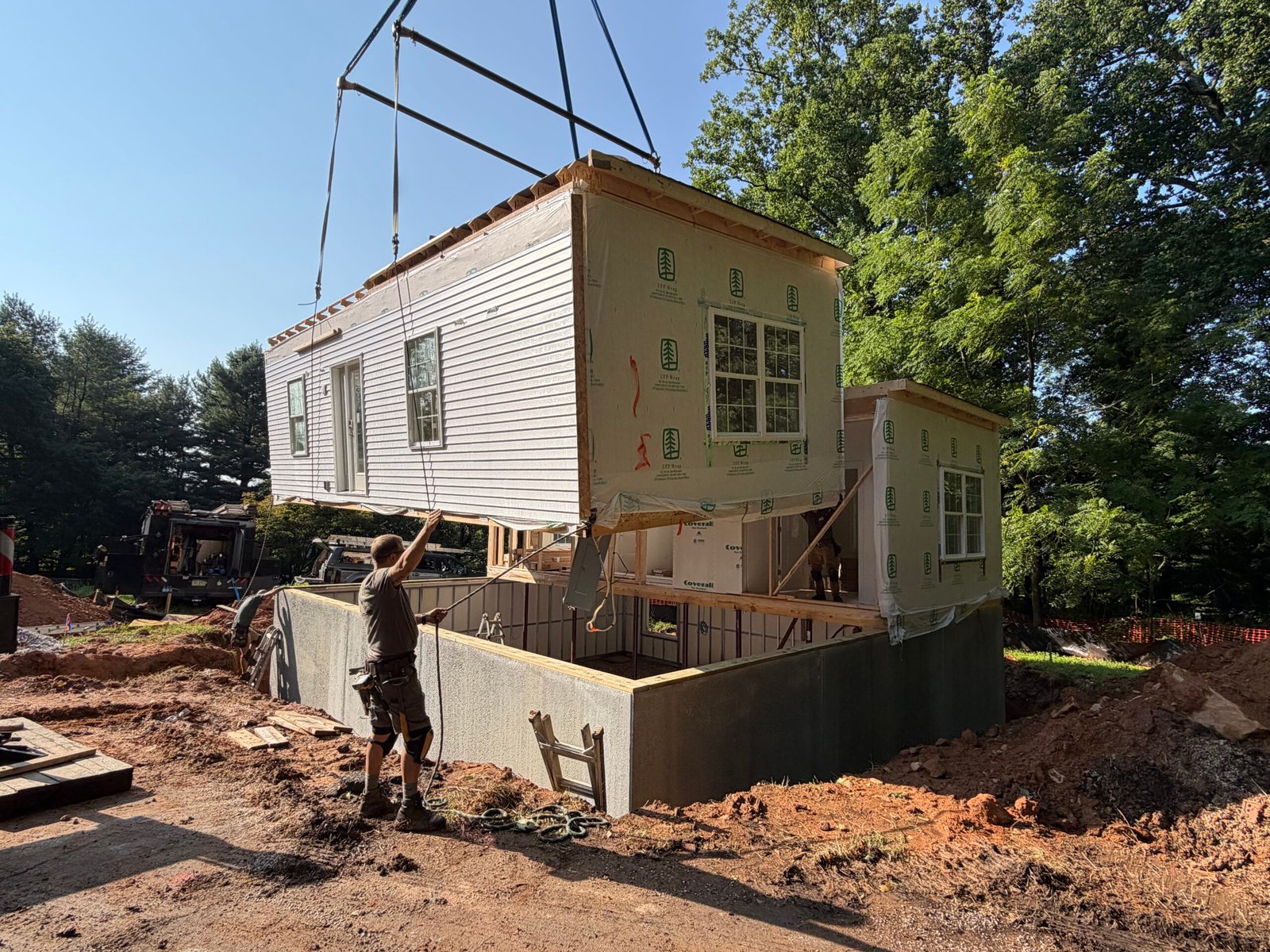
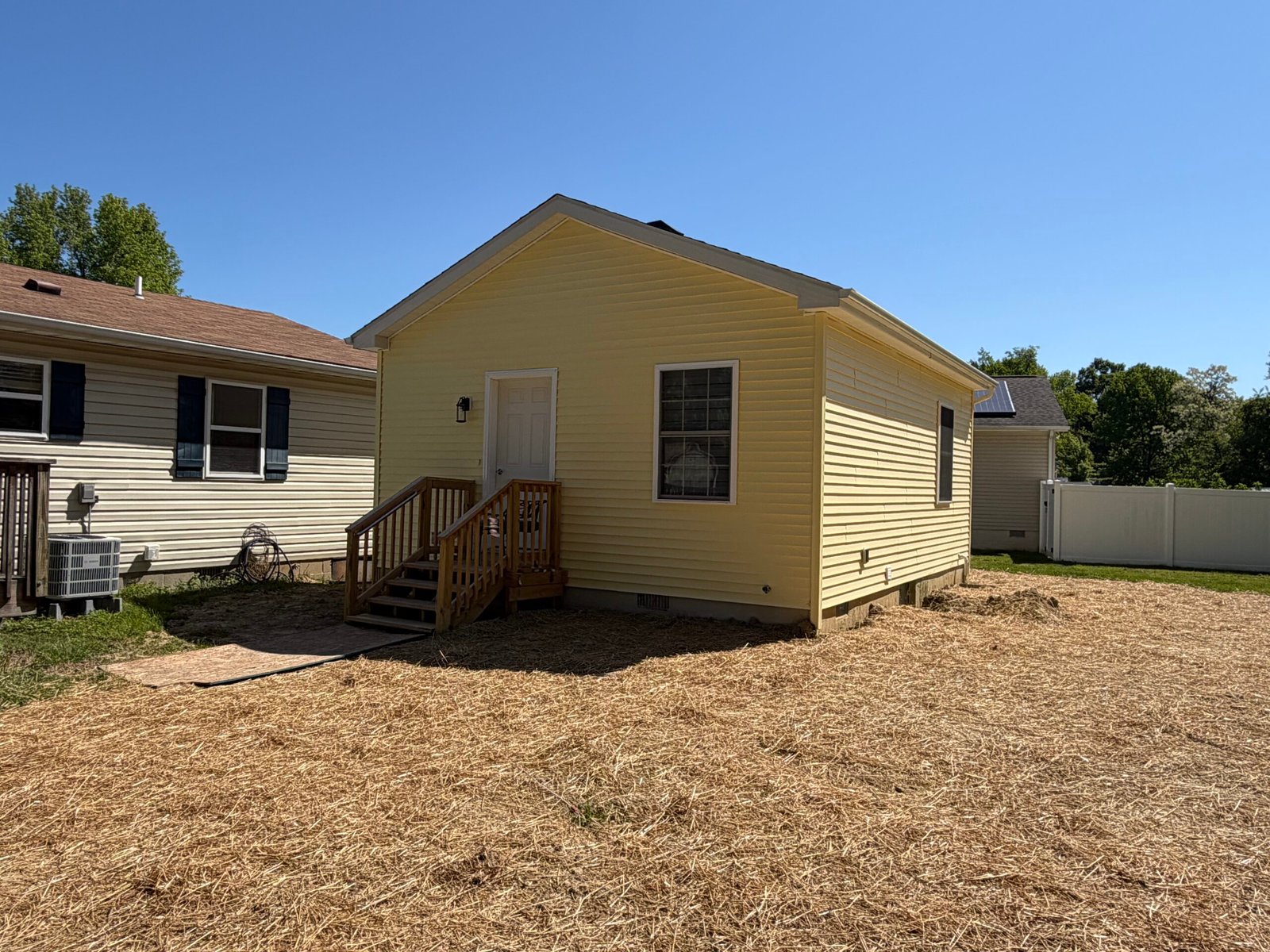
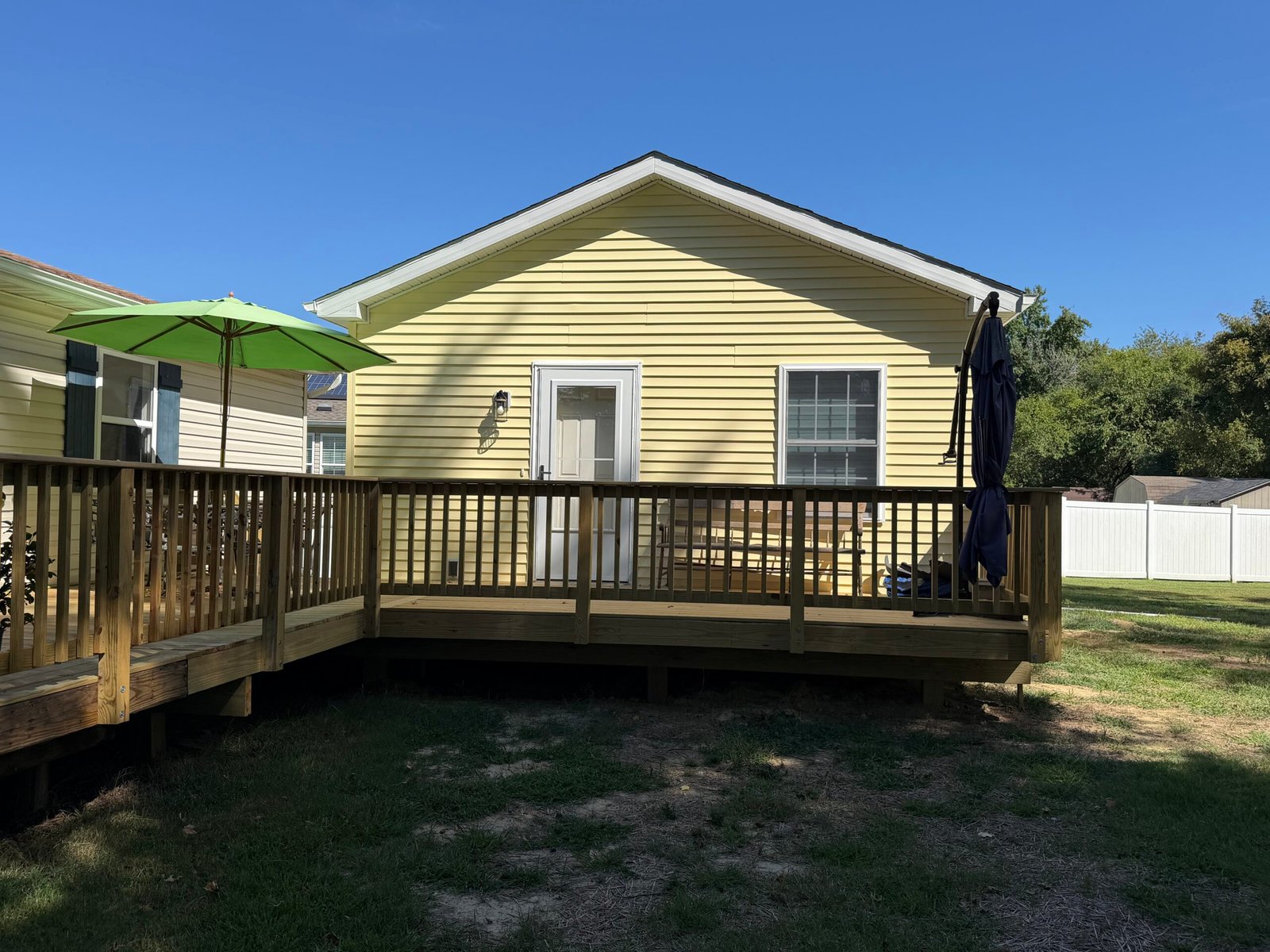
PurBilt project photos
Company-provided photos. PurBilt granted Maryland ADU Guide permission to display these images on its profile.
DC Structures — prefab kit route, not the same as turnkey modular
DC Structures ships pre-engineered building kits across Maryland and markets the Sitka as an ADU kit in multiple sizes from about 405 to 864 square feet. Its Maryland page explicitly warns that the final turnkey cost can be several times the initial kit price.
Best reason to interview: useful for homeowners deliberately shopping for a kit and willing to coordinate local construction. Ask: exactly what materials/design services are included, who becomes the Maryland builder of record, how the plans are adapted for the local jurisdiction, and who owns responsibility for MEP, foundation, labor, utilities and inspections.
Mod Podz — small-space/mobile pricing is visible, but classification must be verified
Mod Podz is based in Bowie and states that it designs and builds homes, ADUs and small intentional spaces and is licensed in Maryland. Its public model page includes mobile products with starting prices, and its FAQ publishes a general custom-build range.
Best reason to interview: one of the few Maryland-facing small-space companies publishing starting prices. Critical question: is the exact product you are pricing a Maryland industrialized/modular dwelling intended for a permanent foundation, a manufactured/mobile unit, or another type of structure? Ask for the exact model approval/certification path before paying a deposit for use as an ADU.
What about Maryland MicroNest?
Maryland MicroNest markets “The Chessie,” a one-bedroom steel-framed modular/tiny home for the DMV and says delivery can occur in as little as 60 days. We found enough public information to flag it as a product worth investigating, but not enough on the reviewed page to independently connect the branded product to a specific Maryland approved manufacturer/model record or to compare an installed Maryland price.
That does not mean the product is unapproved. It means a homeowner should ask for the manufacturer name, exact model identifier, Maryland approval/insignia path, local installer/builder, foundation scope and total installed price before treating the marketing page as a permit-ready solution.
How to find a good ADU contractor in Maryland
Start with your project type and the office that will review it. A contractor with several basement conversions may be a good candidate for an interior ADU, while a detached cottage can require different site, foundation and utility experience. Use the jurisdiction finder and feasibility checker before asking companies to price a design.
Build a shortlist around comparable work
Find candidates through our Maryland builder directory, the company profiles below, and referrals from homeowners or designers who have completed a similar permitted project. Directory inclusion, search position and a polished gallery do not establish workmanship or reliability. Ask each candidate whether it serves your address, takes on your ADU type and can show a completed example with similar site constraints.
Send the same brief to each candidate: property jurisdiction, conversion or new construction, approximate size, intended use, public utilities or private well/septic, access restrictions, and whether you need design and permitting included. Ask what documents are needed for an initial feasibility review and whether that review has a fee. A rough estimate should identify assumptions; it should not promise permit approval.
Check the company that will sign the contract
Request the legal business name and the credentials applicable to the work. Match that entity to the proposal, contract and insurance certificate. A brand name, business registration or “licensed and insured” statement does not tell you which construction credential applies.
- Conversions and other home-improvement work: start with the Maryland Home Improvement Commission and its contractor-status lookup. MHIC regulates residential alteration and remodeling. Its consumer advice also explains how to ask about complaints and obtain a current liability-insurance certificate.
- New-home construction: check the Attorney General’s Home Builder Registration guidance and registered-builder list. The guidance lists exceptions, including builders constructing new homes solely in Montgomery County. If an exception is claimed, confirm the applicable county requirements rather than treating an absent state registration as proof of misconduct.
- Unclear ADU classification: ask MHIC, the Home Builder Registration Unit and the local permit office which credentials apply to the actual scope. Maryland Labor separately describes construction licensing through circuit-court clerks. Do not assume one credential covers every detached unit, addition, conversion or installation contract.
For a modular unit, verify the manufacturer and model approval route as well as the company responsible for installation. The prefab section below explains that separate check. Credential verification is a screening step; it does not measure the quality of the work.
Call references with questions that reveal the work
Request recent clients for comparable completed projects and permission to contact them. Where available, ask for the permit number and reviewing jurisdiction, then check the public permit record or ask the permit office about inspections and closeout. A permit record alone cannot tell you whether the owner was satisfied.
- What did the original contract include, and which costs appeared later?
- How did the contractor handle a failed inspection, hidden condition or change request?
- Who supervised the site, and how often did the homeowner receive updates?
- Did the promised schedule begin before or after permits? What caused delays?
- Was the unit approved for occupancy, and were warranty issues resolved?
- Would you hire the same company for this type of project again?
Compare scope before choosing a price
Ask shortlisted companies to identify included work, allowances, exclusions and unresolved costs using the same brief. Compare design, permits, foundation, grading, utilities, finishes and closeout responsibilities. Enter the proposals in our contractor bid comparison tool. Keep an unpriced item visible until it has a written price; a blank line is not a saving.
Use the scorecard below to record each company’s answers. A useful decision record has four entries for each issue: the answer, supporting document, person responsible and unresolved question. Choose only after the project scope, credentials and references are sufficiently clear to compare.
Pause when the evidence does not match the promise
Investigate pressure to pay before receiving a written scope, a contract entity that differs from the checked company, refusal to provide references or insurance, a promise to bypass required permits, or a proposal that omits major site work. These are reasons to resolve the issue before committing. For payment terms, change orders, warranties and closeout documents, use our Maryland ADU construction contract checklist.
Contractor-selection guidance checked October 5, 2026 against Maryland Labor and Attorney General resources. Company-profile verification dates below apply separately. This guide does not rank or endorse contractors.
11-question Maryland ADU builder scorecard
- What exact legal entity will sign my construction contract? Get the entity name and Maryland license/registration numbers that apply to your project.
- Have you completed an ADU in my county or municipality? Ask for a comparable permitted project, not only a rendering.
- Who confirms zoning feasibility before I pay for full design? Cross-check with our County Rules Tracker.
- How are you calculating my maximum ADU size? Maryland measurement methods differ; use our 75% Size Calculator & Measurement Guide.
- Who owns the permit process? Identify zoning, building, electrical, plumbing, mechanical, rental/license and historic-review responsibilities. For new construction, also verify sprinkler, fire-separation and egress scope using the Maryland ADU building-code guide.
- What is excluded from the price? Ask specifically about survey, civil engineering, geotechnical work, foundation, grading, stormwater, retaining walls, utility trenching, septic/well, impact/connection fees, crane, landscaping and restoration.
- If modular/prefab, who is the actual manufacturer and what is the Maryland model approval path? Request the model identifier—not only the retail brand.
- What assumptions can trigger a change order? Get the allowance and unknown-condition language in writing.
- When does your schedule clock start? “120 days” may mean after permit, after factory release, or after site readiness.
- Who is responsible for final inspections and certificate/license closeout? A finished structure is not the same as a legally occupiable ADU.
- Can I see insurance, warranty and payment schedule before signing? Avoid front-loading payments without clear milestones and deliverables.
Shopping for a prefab ADU near you? Send this quote checklist
A nearby showroom or a Maryland delivery area is only the starting point. Ask each supplier to price the same property, model and installation scope so you can compare the total project rather than a factory package with a completed home.
First use the Maryland ADU Jurisdiction Finder to identify the reviewing offices. Then send prospective suppliers this request:
Please provide a written proposal for my property and identify the exact manufacturer, model, floor area and product classification. Separate the factory or kit price from design, local permits, foundation, delivery, crane or setting work, utility connections, site restoration and final inspections. For every item, show whether it is included, an allowance, excluded or still unpriced, and name the company responsible. State what property information you need before confirming the price and schedule.
Documents to request before comparing deposits
- The proposed floor plan and exact manufacturer/model identifiers.
- The Maryland approval documentation applicable to that modular model, or an explanation of the approval route for a different product type.
- A site and delivery assessment covering access width, overhead obstructions, crane placement and foundation responsibility.
- A list of utility and site-work assumptions, with responsibility for investigating unknown conditions.
- The contracting business names, applicable license or registration details, insurance information, warranty responsibilities and written payment milestones.
- A schedule showing which dates depend on permits, site readiness, factory production and delivery.
Maryland publishes manufacturer and model resources through its Industrialized/Modular Buildings program. The state’s description of state and local responsibilities explains that local officials still oversee installation and on-site work, while zoning and site development remain local responsibilities. Factory approval alone therefore does not settle whether the unit fits your property.
Enter the returned proposals in the ADU budget and contractor bid comparison tool. Keep an excluded or unpriced item visible as an unresolved cost; do not count it as free. This checklist was added September 14, 2026; it does not change the review dates of the company profiles above.
Worked example: compare a prefab package with an installed quote
Fictional teaching example, added September 14, 2026. These figures are invented to demonstrate scope comparison. They are not Maryland price averages, supplier quotes or estimates for your property. Assume both proposals describe the same unit size, finishes and project site.
Proposal A starts at $120,000 for the factory package. Proposal B starts at $180,000 and includes design, foundation and delivery. The homeowner assigns the following illustrative allowances to excluded items while waiting for written prices.
| Scope item | A: package quote | B: installed quote |
|---|---|---|
| Headline quote | $120,000 | $180,000 |
| Design and engineering | Add $15,000 allowance | Included |
| Foundation and installation | Add $25,000 allowance | Included |
| Delivery and crane | Add $10,000 allowance | Included |
| Utility connections | Add $20,000 allowance | Add $12,000 allowance |
| Permit and review fees | Add $8,000 allowance | Add $8,000 allowance |
| Site restoration | Add $7,000 allowance | Add $7,000 allowance |
| Subtotal for listed scope | $205,000 | $207,000 |
| Contingency and other unresolved costs | Not included | Not included |
The $60,000 headline gap becomes a $2,000 difference for the listed scope. Neither subtotal is a final project budget: the added allowances are not contracted prices, and unresolved costs remain outside both totals. In particular, the $8,000 fee entries are invented placeholders, not a county fee schedule.
What to ask before choosing either proposal
- Why do utility allowances differ? Confirm that both cover the same trenching, connections and service upgrades. A smaller allowance can reflect less included work rather than a saving.
- What does “included” cover? Request written limits, site assumptions and responsibility for overruns. Do not add included items again when totaling the bid.
- What remains unpriced? Investigate surveys, demolition, unusual grading, stormwater work, private-system upgrades, taxes, financing costs and contingency as applicable to your project. Record each as included, excluded, not applicable or unresolved.
- Are the specifications equivalent? Compare fixtures, finishes, warranties, payment milestones and final inspection responsibilities alongside the numbers.
Use the Maryland ADU budget and bid comparison tool for your actual proposals. Replace allowances as written prices arrive, and use the cost exclusions guide to identify gaps before committing to a deposit.
Before paying a builder or prefab deposit
- Confirm the county rule set first. Maryland is still in a 2026 implementation transition.
- Run size and site feasibility before choosing a model. A beautiful 800-sq-ft plan is irrelevant if the local rule or lot supports less.
- Check septic/well early. Use our Maryland ADU Septic & Well Readiness Checker if the property is not clearly on public utilities.
- Verify the contractor’s current Maryland credentials. Do not rely only on a logo or “licensed” badge.
- For modular projects, verify the manufacturer/model approval path. Maryland maintains approved-manufacturer and current model/project-status records.
- Compare full project scopes, not headline prices. A $22,000 kit and a $200,000 design-build contract are different products. Use our Maryland ADU Cost Escalation Guide to mark which site, utility, delivery, permit and closeout categories are still outside a quote.
- Do not buy a unit first and solve permitting later. Local site constraints can make transport, crane placement, foundation, utilities or the ADU itself infeasible.
Our editorial methodology
We included companies because we found current public evidence that they market ADU, modular or relevant prefab services to Maryland. We prioritize original company pages for service scope and pricing claims, and Maryland government sources for modular-building rules. We do not infer quality from advertising, awards, testimonials or SEO rankings.
This is a research directory, not a recommendation list. If a company wants a factual correction, additional licensing detail, or clarification of what its published price includes, it can send supporting documentation to gijo.j@marylandaduguide.com. Paid relationships, if ever introduced, should be disclosed separately and must not determine editorial inclusion or ranking.
Primary and company sources used
- Maryland Department of Labor — Industrialized/Modular Buildings
- Maryland Department of Labor — What Is a Modular and Manufactured Home?
- Maryland Department of Labor — Industrialized/Modular Building Program Procedure
- Maryland Department of Labor — 2026 Model/Project Status List
- Makara ADU
- UP Craftsmen
- Karma Construction Group — Maryland ADUs
- Clarksville Construction — Maryland ADUs
- Capital ADU
- PurBilt — ADUs/Additions
- DC Structures — Maryland Prefab ADUs
- Mod Podz
- Maryland MicroNest
Start with the Maryland ADU Guide 2026, verify your local status in the County Rules Tracker, then use the 75% Size Calculator and Septic & Well Readiness Checker before comparing builder proposals.
What to do next
Start by finding the office that reviews your property. A mailing city or a county guide does not establish your parcel’s authority.
- Find Who Reviews My Property.
- Obtain your parcel identifier, survey, floor plans and utility records.
- Ask the reviewing office which current rules, supporting documents and approvals apply.
- Continue to your planning workspace.
Enable JavaScript to prepare a downloadable next-step brief. Planning guidance is not permit approval.